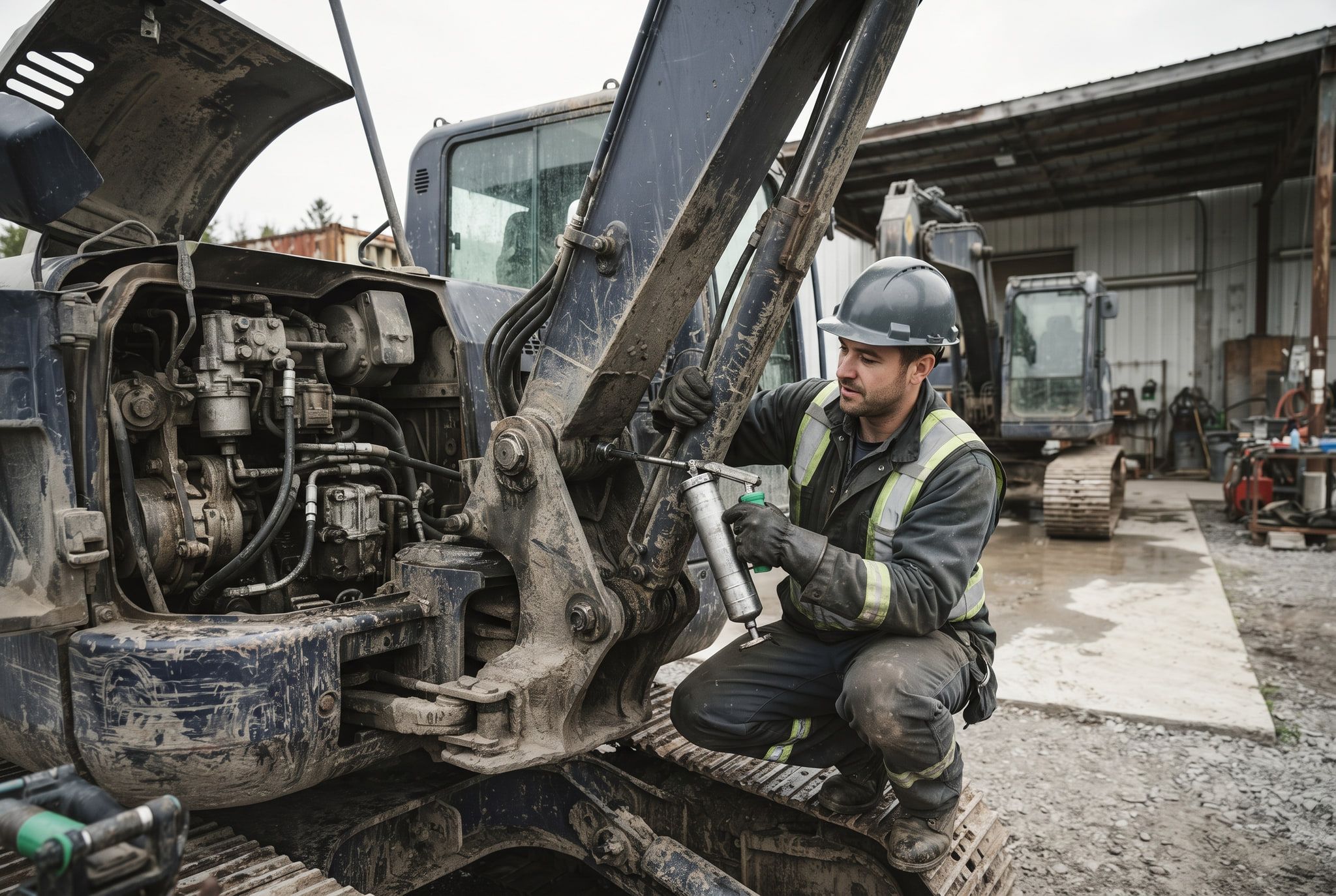
Marketing & Growth Systems Built for Heavy Equipment Dealers
Heavy equipment sells to contractors, not homeowners, and downtime is an active-cost emergency, not an inconvenience. This is how we help dealers win the rent-or-repair moment, turn first-time renters into fleet accounts, and market in step with the contractor planning calendar.
Industry Overview
Heavy Equipment Sells to Contractors Under Job-Site Pressure
Heavy equipment dealers serve a different buyer than most trades in this hub: a contractor, not a homeowner, and often mid-project rather than at the start of one. When equipment breaks down on an active job site, the cost isn't just the repair — it's a crew and a schedule sitting idle, which makes the urgency of a downtime call fundamentally different from a homeowner's emergency.
Machine down — the operator calls
Equipment and site captured
Routed by machine type and location
Service call logged and assigned
How a downtime call reaches a technician
Inside our Growth Score™ engine, we currently model heavy equipment under our broader Contractor industry profile, with typical transaction values in the $2,000–$15,000+ range — larger equipment sales and long-term fleet accounts frequently running well beyond that. Many dealers also operate across rental, sales, parts, and repair simultaneously, which changes how a Google Business Profile needs to be structured compared to a single-service trade.
Demand follows the same seasonal rhythm as the contractors who buy and rent equipment: winter planning season drives spring and summer bookings, with downtime and repair demand running constant year-round underneath that seasonal pattern.
Growth Challenges
Where Heavy Equipment Dealers Actually Lose Revenue
None of these are marketing-budget problems first. They're systems problems that marketing spend can't fix on its own.
Revenue Leaks
Missed downtime calls that go to a faster-responding competitor, first-time renters who never get followed up with and never become fleet accounts, and equipment availability that isn't clearly surfaced when a contractor is deciding in the moment.
Competitive Landscape
Contractors comparing dealers within the same hour during a downtime crisis, making review strength and clear availability a direct competitive lever, not a nice-to-have.
Operational Bottlenecks
Manual response that struggles to answer rent-vs-repair questions quickly, exactly when a contractor counting idle-hour costs needs a fast, clear answer.
Marketing Challenges
Marketing that starts once build season is already underway, missing the winter planning window when contractors are actually deciding what to rent and buy for the year.
Technology Challenges
No automated first-response for downtime calls, no tracking of which renters are repeat customers, and no systematic review-request workflow after a fast emergency rental or repair.
Trust & Credibility Gaps
A thin review base with no downtime-specific reviews, and fleet or inventory photos that don't clearly show what's actually available right now.
KPIs to Track
The Numbers That Actually Move Heavy Equipment Revenue
Active cost
Every idle hour on a job site costs a contractor money, not just time
Rent-or-repair
The real-time decision most downtime calls are actually resolving
$2K–$15K+
Typical transaction range — larger equipment sales run well above this
Planning-season
Rental and sales demand follows the contractor's winter planning cycle
› Speed-to-lead / first-response time on downtime calls
Service area page buildout for every region genuinely served — following the principles in our service area pages guide.
How Alliance Optima Helps
A Growth System Built Around Heavy Equipment's Actual Priorities
Heavy equipment sits within the Contractor profile inside our Growth Score™ engine, which weighs review strength, Google Business Profile completeness, and lead-capture automation heavily — the three areas most directly tied to winning downtime-driven calls and converting renters into standing accounts.
After your free Growth Score™ assessment, we walk through the results together in a Growth Strategy Session™ — a focused conversation about which of the opportunities above will move revenue fastest for your specific business.
Find Out Your Growth Score™
Get a free, AI-powered assessment of your online presence in under 60 seconds.
A 60-second assessment of your website, Google presence, lead capture, and automation.
2
Growth Strategy Session™
A free session reviewing your report and identifying your highest-impact heavy-equipment-specific moves.
3
Prioritized Blueprint
A sequenced plan across GBP readiness, downtime speed-to-lead, and fleet-account conversion.
4
Ongoing Optimization
Adjustments timed to the contractor planning calendar, not a one-time setup.
What You Get
Deliverables
✓ Your Growth Score™ Report (downloadable PDF)
✓ A live Growth Strategy Session™ walkthrough
✓ A prioritized growth blueprint specific to heavy equipment
✓ Google Business Profile recommendations across rental, sales, and repair
✓ Downtime speed-to-lead automation plan
✓ Review generation and fleet-account conversion strategy
Frequently Asked Questions
Does Alliance Optima work specifically with heavy equipment dealers?+
Yes. Heavy equipment currently sits within our broader Contractor industry profile inside the Growth Score™ engine, which weighs review velocity, Google Business Profile completeness, and lead-capture automation heavily — the areas most directly tied to winning downtime-driven rental and repair calls.
What makes heavy equipment marketing different from marketing for home service trades?+
The buyer is a contractor, not a homeowner, and the urgency is different: equipment downtime is an active-cost problem for the contractor's crew and job site, not a home emergency. On top of that, a single dealer often operates across rental, sales, parts, and repair simultaneously, which changes how the Google Business Profile needs to be structured.
How long does it take to see results from a heavy equipment growth plan?+
Google Business Profile and speed-to-lead fixes can show up in call volume within weeks, especially heading into contractor planning season. The rental-to-fleet-account system typically compounds over a few rental cycles as repeat renters get identified and converted.
Do Local Service Ads work for heavy equipment businesses?+
Coverage is limited and inconsistent for this category compared to home trades like HVAC or plumbing. We focus on the Google Business Profile and review foundation that pays off regardless of LSA availability in your specific market.
What is the Growth Score™ assessment and how does it apply to heavy equipment dealers?+
The Growth Score™ is a free, AI-powered assessment of your website, Google presence, lead capture, and automation, delivered in minutes. For heavy equipment and other contractor-adjacent trades, it automatically prioritizes review strength, Google Business Profile completeness, and lead-capture automation.
Do you help convert renters into fleet accounts, or just generate new leads?+
Both. A systematic habit of following up with first-time renters and flagging repeat customers for an account conversation depends on the same CRM tracking that powers downtime speed-to-lead — we treat acquisition and account growth as one connected system.
Go Deeper
Heavy Equipment Growth Guides
Every guide below plugs into this playbook — start wherever your business needs the most help right now.
We use cookies to understand how visitors use our site (Google Analytics and Microsoft Clarity) so we can improve it. You can accept or decline analytics cookies. Essential cookies are always on. Privacy & Cookies